Showing posts with label Williams; Richard. Show all posts

Monday, 29 July 2013

Errol Le Cain's Sailor and the Devil


Errol Le Cain's short film Sailor and the Devil was made in 1966, while Le Cain was working at the Richard Williams studio. I first heard about the film thanks to its brief mention in Denis Gifford's book British Animated Films; I later found that it has something of a following, despite being hard to see. From what I understand no complete print is known to exist, although Garret Gilchrist has a copy with only a few seconds missing, which he has recently posted online:


Back in 2010 Michael Sporn wrote a blog post about Sailor and the Devil, drawing largely on a 1960s PBS documentary and showing a few black and white stills, while Hans Bacher provides some colour shots, including the ones I used above. More recently Amid Amidi wrote a piece on the film, which also discusses Le Cain's other animation work.

More information about Errol Le Cain, who passed away in 1989, can be found at the website Errol Le Cain Legacy. Le Cain does not appear to have worked in animation for long - although it is worth noting that he worked with Pearl & Dean and Moreno, as well as Richard Williams - and instead established himself as a children's book illustrator.

Saturday, 6 July 2013

Gromit Unleashed


Nick Park inspects Julie Vernon's mosaic Gromit.


For a few years now, Wild in Art has been holding charity events in which plain white sculptures of animals are decorated by various artists and spread across a city. The events include elephants in Norwich, penguins in Liverpool, toads in Hull, sheep in Skipton... and now, with the collaboration of Aardman, Gromits in Bristol.


Gromit Unleashed started on the first of July and will run until the eighth of September. During that time, eighty sculptures of Gromit - all made using the same base, but each with an overall paint-job given by an individual artist or art team - will be spread across Aardman's home city of Bristol, with proceeds going to the local children's hospital.


Comedian Harry Hill was one of the celebrity artists involved, contributing a bald Gromit.


A range of celebrities got in on the act, with the likes of Jools Holland, Joanna Lumley and Harry Hill providing their own takes on Gromit.


Pixar's contribution to the trail.


Other than the involvement of Aardman, there are several connections to animation and cartoons. Pixar contributed a Buzz Lightyear Gromit; Richard Williams painted a rainbow Gromit; the crew behind The Beano plastered their Gromit with a comic collage; Raymond Briggs combined Gromit with his immortal Snowman; Where's Wally? creator Martin Handford placed Gromit into those iconic red and white stripes; Gruffalo illustrator Axel Scheffler came up with the Grommalo; Simon Tofield, creator of Simon's Cat, doodled his feline star over Gromit; Quentin Blake brought his distinctive style to his sculpture; political cartoonist Gerald Scarfe coated Gromit with one of his trademark ink splashes; and graffiti artist Tom Deams and Zayn Malik of boy band One Direction provided unofficial takes on two DC Comics superheroes, turning their Gromits into Superman and the Green Lantern respectively.


Simon Tofield's Gromit


Finally, there were a few designs coming from within Aardman itself. amongst the Gromits was a traditional, unadorned version of the character credited simply to the Aardman studio. Richard Starzak, aka Richard Goleszowski, aka Golly, collaborated with artist Jane Kite to create a Trojan Gromit operated by Shaun the Sheep. Nick Park, meanwhile, came up with a design which incorporated both of his characters...


Wednesday, 30 January 2013

Raymond Durgnat on British animation in 1970


Books on the history of British cinema often overlook animation. Raymond Durgnat's seminal 1970 volume A Mirror for England: British Movies from Austerity to Affluence is a key exception; after briefly touching upon Animal Farm and namechecking Dustbin Parade and Richard Williams during the course of the book he dedicates his final sub-chapter to the subject of animation in Britain.

He begins this overview by returning to Halas & Batchelor, specifically The Hoffnung Symphony Orchestra (which he credits with "spiritedly solving the problem which gave every Hollywood cartoon unit, from Disney to U.P.A., such difficulty; how to reconcile emphatic laugh gags with smartish post-Disney graphics") and Automania 2000.


The Rise and Fall of Emily Sprod. More stills here.


Durgnat then goes on to cover George Dunning's short films The Wardrobe, The Flying Man and The Apple, describing them as being "as near American wryness as any English tone", before going on to analyse the films of Bob Godfrey.

In a typical example of his characteristic writing style Durgnat describes The Do-It-Yourself Cartoon Kit as "a prestidigitous jingle-jumble of iconographies, from Goonish to Gothic, by way of empire-builders' emblems, admen's knickknacks, cultural doodads and assorted oojamaflips" before going on to make some very intriguing comments on the animator's potential future. Although Godfrey is now firmly associated with bawdy knockabout, Durgnat had something quite different in mind after discussing the proto-Gilliam visual style of The Rise and Fall of Emily Sprod:

The Rise and Fall of Emily Sprod... suggests that Godfrey might develop towards cartoons which are only incidentally humorous, and, primarily, dream-like, satirical, or even macabre, along the lines of the Polish school. For the Poles share the British ambivalence towards the past...

He then moves on to Richard Williams's Love Me, Love Me, Love Me and The Little Island. Of the former he has this to say:

If fratricidal strife, and ironies of cool and rage, are the covert theme of Tom and Jerry and the American cartoons, the corresponding English theme is a derisive nostalgia — not always the same thing as satire. Richard Williams's Love Me, Love Me, Love Me is a sharp send-up of British mediocrity as being self-protective masochism... all in all this cartoon is almost a classic crystallisation of the British character as Tex Avery's The Cat That Hated People of the American.

A Short Vision.


Finally, Durgnat concludes his book with a brief overview of Peter and Joan Foldes' Animated Genesis and A Short Vision:

The latter film, inspired by the irritatingly righteous, albeit naggingly plausible, spirit of C.N.D. insists, with its strong sculptural visuals, pointedly reminiscent of Henry Moore's wartime sketches of Londoners sleeping safely in tube shelters during the blitz, in making us feel, in skin and sinew, the unleashing of an atomic device that melts the bone under the face and snuffs the last spark of life from a blackened, superfluous, and shameful planet. The cartoon film, too, can be a moral sledgehammer.


 One of Henry Moore's sketch Pink and Green Sleepers.

Tuesday, 20 March 2012

Animation Nation: Something to Say part 1


Here's the third part of my transcript of the 2005 BBC4 series Animation Nation. The series' second episode discusses the more experimental side of British animation; the first half, covered in this transcript, focuses mainly on works from the sixties and seventies.


Footage from the premiere of Yellow Submarine, followed by footage from the film itself.


Narrator: London, July 1968, and the premiere of the latest film from the most famous band in the world. But adoring fans, expecting another madcap adventure with the fab four, were in for a surprise. Yellow Submarine didn't feature real life Beatles but cartoon versions of John, Paul, George and Ringo. Nothing quite like this had been seen before in a British animation film. Yellow Submarine was colourful, bursting with energy and invention: it signalled a new way forward for British animation. After Yellow Submarine came a time when animators could free their minds, take risks.

Gerald Scarfe: I satirised everything I could, and I had Mickey Mouse on drugs, oh horror of horrors! I mean, that was something you just didn't do.


Footage from Candy Guard's series Pond Life.


Narrator: Animators could turn to comedy to ask questions of the world.

Candy Guard: I just want to make people laugh. But not by being silly, but by being truthful.

Narrator: Animators could turn your world upside down.

Terry Gilliam: Whatever we were doing was trying to shock people into waking up and looking at the world in a different way. I mean, if it's subversive, it's subversive in trying to change people's perspective of what the world is.

Narrator: This is the story of how British animation got bite, when British animators began to make films with vision, and films with something to say.


Behind-the-scenes images from the making of Yellow Submarine.


Narrator: Yellow Submarine was based on twelve songs the Beatles had been recording during the explosion of psychedelia in 1967. The film took eleven months of frantic activity, a team of nearly 200 animators working night and day in the Soho studios of company TV Cartoons. The overall director of Yellow Submarine was Canadian George Dunning, who impressed on those joining the project what was expected of them to capture the spirit of the film.

Bob Godfrey: He said, "oh, Bob, have you ever taken LSD?" And I said "Oh, God, no, George, nothing stronger than aspirin really, no" he said "oh, that's a pity, because the whole film is a psychedelic trip".

Narrator: From the beginning, Yellow Submarine was unusual: An animated film aimed at grown ups, not children.

John Coates: We wanted to do something that would be appreciated, not by kiddies, young kids, but right across the board, which meant that a lot of the humour and things in the script are fairly adult.

Narrator: The film was a challenge to established animators used to a more disciplined working environment.

Bob Godfrey: I said "where's the storyboard, where's the script" he says "there's no storyboard, there's no script", and I said "well, I see. So what do you want me to do - what do you want me to do, what do we do?" he said "well, you come in, and you tell me jokes." And I knew he didn't like jokes very much, so I said "okay". I got a joke into the Sea of Monsters, there was this terrible monster, and so I had the submarine fire a cigar like a torpedo into this monster's mouth, and then I had the submarine's sort of conning tower sort of open up and became a cigarette lighter, and lit the cigar which the monster puffed at and then it exploded.


Footage from Yellow Submarine.


Narrator: It was to graphic artist Heinz Edelmann that Dunning turned to for the look of Yellow Submarine, the vivid and colourful designs which set its psychedelic style.

Terry Gilliam: To me, that was the sixties, late sixties - it was this brilliant colour, and again it was very great on distorting and being surreal, the way he pushed characters... his artwork I just adored. The thing I like most about Yellow Submarine is just his designs.

Narrator: Director George Dunning was interested in experiment. He wanted all his animators to take risks - to be quirky and surreal.

Jimmy Murakami: He instructed all the animators on how to become filmmakers. He was never happy to get footage from animators that was just safe and workable, he wanted to get something different, exciting.

Gillian Lacey: I was very young and it was my first job there, but it felt so different. You know, I hadn't a great love for traditional cartoon or American features - Disney, at that time, particularly .


Footage from Yellow Submarine's Lucy in the Sky with Diamonds sequence.


Narrator: Lucy in the Sky with Diamonds pushed the film's experimentation to the limit. It used an animation technique called rotoscoping, tracing live action images taken from old movies, but then overlayed these with brushstrokes to make the sequence more stylised and surreal.

Gillian Lacey: Don't know what it's about! Dare I say what it's about? But Bill Sewell designed that and it was very free-flowing, I mean it was based on live action sequences, paint was all over the place, so for me it was a quite druggy kind of experience, you know.

John Coates: Everybody sat up and said "hey, we don't have to imitate Disney any longer". I'm not knocking Disney 'cause their films were lovely, but we don't have to feel we're tied down to doing imitations of that, we can go off and do anything we like.

Narrator: Yellow Submarine reflected a message of peace and understanding which looked back to the 1967 summer of love. But by 1968, the mood had changed.

Robert Hewison: to be inn London in 1968 was really rather strange, because on one hand you could go down King's Road and there were all the dollybirds and the miniskirts and there was a lot of fun and affluence and you could go down the clubs. Everybody was having a good time. But at the same time suddenly you'd hear somewhere to your left or right you'd here "Out, out, out!" and suddenly there'd be a demonstration.

Narrator: In 1968 the atmosphere on the streets was harder-edged, more political and found its focus in the protests against the Vietnam war. One film picked up on the sense of unease the war had generated; this was a bold collaboration between an animator and a film director: The Charge of the Light Brigade.


Footage from The Charge of the Light Brigade.


Robert Hewison: It picks up on a contemporary issue, but filters it through a Victorian issue. The Charge of the Light Brigade during the Crimean war was a complete cock-up, and basically what they're trying to say in the film is that the people in charge of us don't know what they're doing.

Narrator: To reinforce the anti-establishment, anti-war message of his film, director Tony Richardson wanted animated inserts to punctuate live action sequences. So he turned to animation director Richard Williams.

Richard Williams: It was a metaphor for the Vietnam situation, like today, winding everybody up for a war - England was the policeman of the world, as America now is, and it was just getting everyone ready to be cannonfodder, you know, and to attack the dreadful Russians. And the terrible fear, fear, fear of the Russians, you know, the Russians are coming!

Narrator: The fine detail of the animation meant that Williams' reputation for perfectionism was well-tested.

Richard Williams: It was terrifying, and thrilling, and he stood right by us. And whenever we delivered something good he'd send over champagne, we'd all get drunk and fall on the floor and start again, you know. I have to say it's probably the best job I ever got offered. I had a tiny little unit, about five of us, and we worked ourselves crazy, and we went three or four days at a time, working all day and all night and collapsing, doing all this crosshatching.

Narrator: Using a graphic style and images from the 1850s, but infusing it with the spirit of 1968 created a powerful satire about empire and Britain's role in the world. But despite their quality and invention, The Charge of the Light Brigade and Yellow Submarine failed to make the kind of money which had movie moguls clamouring for more. So the animation houses of London waited in vain for the next big animation gig. But, in a lean period, Bob Godfrey's studio on Wardour Street could be relied on as a source of work.

Bob Godfrey: The animators about that time were coming into my studio from being laid off by Yellow Submarine, you know, because Yellow Submarine was finished and at the end of each feature people get laid off and they'd come round to me and I'd give them work, you know, because they were good.


Footage of Bob Godfrey working in his studio.


Narrator: Godfrey's reputation also attracted those looking for their first break.

Terry Gilliam: When I got to London, somehow his name kept popping up, and I was running around with my portfolio trying to get work, and I went to Bob's studio because people said this was an exiting place to be.

Narrator: Although Terry Gilliam never got a job with Bob, he had a profound respect for his sense of mischief.

Terry Gilliam: It was such a life spirit there, and a joy being crude and childish sometimes - especially when he got into his sex stuff, he just couldn't wait to show tits and bums!


Footage from Kama Sutra Rides Again.


Narrator: Taking advantage of a more liberal climate of censorship, Godfrey made Kama Sutra Rides Again: one man's search for sexual health and efficiency.

Bob Godfrey: He as like, er... screwing for Britain, you know! He was an enthusiast, his wife just went, you know, like wives, "oh, here he goes again, its his hobby".


Terry Gilliam illustrates naughtiness.


Terry Gilliam: It was a very British kind of thing - naughtiness, I think that's what it's about. It's like the postcards at the beach, they're naughty, and Bob just pushed it a little bit further.

Bob Godfrey: I gave each animator a sort of sexual position, you know. "You will do the, er, the hammock, you'll do the hammock" "Oh, thanks!" "An you will do something else, you know, the bicycle"

Bob Godfrey: We were kind of satirising the permissive society, I suppose, really. That's what we were doing.

Narrator: Kama Sutra was a hit on the adult film club circuit, but had limited distribution in the cinema. In the early seventies it was a new television show which brought an animated kind of subversion to a mass audience, and gave Terry Gilliam his big break. Gilliam's cutout animation from Monty Python, with its bizarre juxtaposition of familiar images, had a vital role in this surreal form of comedy. The animation's visual humour broadened the Pythons' appeal.

Terry Gilliam: I keep hearing this as a I get older and people come out of the woodwork and say "John wasn't really funny, Mike was a bit boring, Terry was over the top, but your animations - that's why I watched the show."

Narrator: As Gilliam demonstrated on Bob Godfrey's very own TV show, his own style of cutting and assembling images was simple but effective.

Terry Gilliam: Sometimes I really felt the technique was dictating the material I was doing. By staying within those limited parameters it forced me to deal with certain things in certain ways, and I guess the violence came out - 'cause crude actions, boom! Do that - you couldn't do beautiful, articulated flying creatures that wafted around the place and were incredibly beautiful, they were just simple, they went DUM DUM DUM, BANG!

Bob Godfrey: Terry's work used to link the other things, and I thought it fitted in terribly well, because it was surrealist, and a lot of their sketches were surrealist.


Footage from Monty Python's Flying Circus.


Terry Gilliam: I was torn in some ways 'cause I love these paintings, I love them just for being beautiful paintings. But just because it's beautiful and wonderful and classical and done by a great artist doesn't mean I can't fuck it up. We did that, the Michelangelo one during the age with Mary Whitehouse, Lord Longford, these were the great censors that were out there trying to stamp out all the indecency in television in particular and there was something about - you know, you take a classic statue like Michelangelo's David, everybody's seen it and it's nude. So, well, I put a fig leaf on it. Finally, it's pulled off and it's Lord Longford's face rather than Michelangelo's genitals.


Terry Gilliam: It was very juvenile, what we were doing, basically. If there was somebody who was in a position of authority, somebody who was pompous, something that was hypocritical, you go for it because they need to be attacked all the time, because the world sort of aspires to pomposity and seriousness, and if you can undermine it you're doing, I think, some important work.


Robert Hewison: Suddenly, there it was in your living room. Suddenly, the kind of surrealism of the Pythons was part of a mass medium, and of course it changed the way people acted, it changed the way people spoke, it changed the way people thought about the previous hierarchical world of deference and authority.

Narrator: If Python and Terry Gilliam's animation mocked authority, then in the hands of political cartoonist Gerald Scarfe it became a more savage weapon of satire with a darker portrayal of the world. In 1973, Scarfe decided to turn to animation to record a trip to America. He used the medium to satirise the sacred idols of American power and culture.


Footage from Long Drawn-Out Trip. More stills here.


Gerald Scarfe: In the 1970s film A Long Drawn Out Trip there was very much an effort to satirise America. I mean, I love America, and when I was growing up in the fifties in England everything exciting and fantastic was in America - Elvis Presley movies, automobile cars and so forth, but when I went there since I was known as a satirist in this country, I knew that that's what they wanted from me, and yes, I satirised everything I could, and I had Mickey Mouse on drugs, oh horror of horrors! I mean, that was something you just didn't do.

Narrator: Long Drawn-Out Trip attracted the attention of Pink Floyd, who invited Scarfe to provide animation for a new musical project they were planning: The Wall. Rock star patronage gave Scarfe the freedom to produce a series of iconic images which defined an era as the seventies collapsed into the eighties.


Footage from The Wall.


Gerald Scarfe: I think when I was working on the images in The Wall there was a political purpose there behind them. It wasn't really specifically against any government or any personalities in particular, but it was against The System, a system. I was an asthmatic child and therefore missed a lot of my education, and at what schools I went to I was always behind, and I was always scared of the teacher, and I kind of had this feeling that I was being shoved through some kind of mincing machine, through some sort of system. And being made to come out the other end, not exactly cannon fodder, but some kind of fodder. The Wall itself is about the way we all build up walls within ourselves, to stop our vulnerability being damaged. Anyone can get in, past and get to you and upset you, you build up a kind of defence against them and that's the wall. When I had to think up something for the forces of oppression, I tried to think of something unyielding, something unforgiving, something thoughtless and something that was blind to any kind of feeling . After a while, the image of the hammer became so obvious to me.

1-2-3-4-5-6

Wednesday, 15 February 2012

Animation Nation: The Art of Persuasion part 2


Here's my second transcript of BBC4's 2005 documentary series Animation Nation. This half of episode one, The Art of Persuasion, focuses mainly on advertising. The transcript of the first half can be read here.
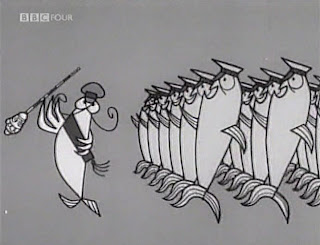


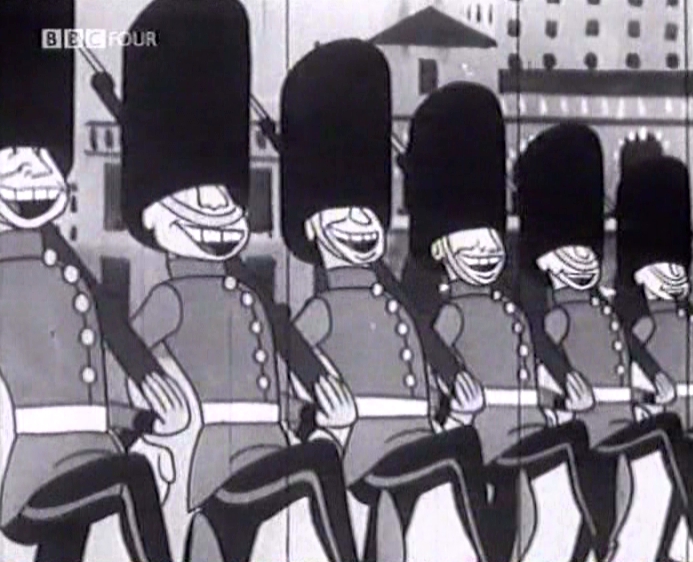
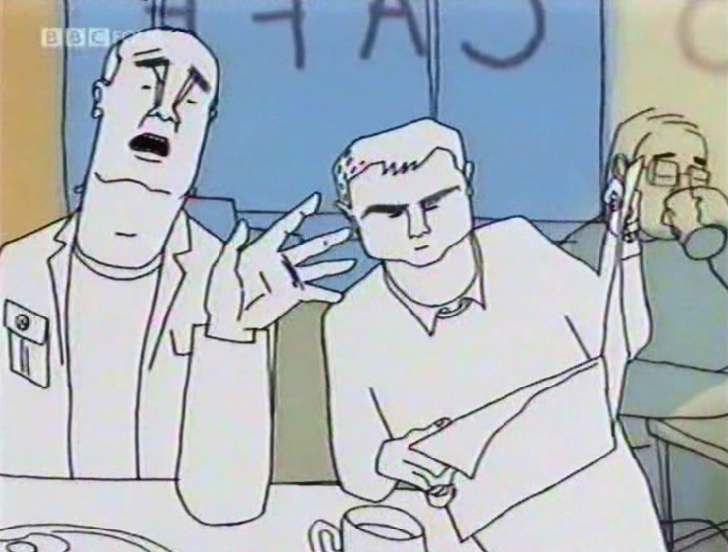
Footage from a Shippam's advert. More stills here.


Narrator: In 1955 ITV was launched, introducing American-inspired advertising breaks. Suddenly animation was in demand - not from government, but from hundreds of clients keen to promote their brands to a potentially massive new audience.

Vera Linnecar: I really think without ITV we wouldn't have had British animation as it is now, because it was the complete underpinning of the money side. It was the bread and butter.

Paul Wells: What this brought to bear was the fact that advertising requires distinctiveness in the ways it got across and sold its products, and animation was the perfect vehicle for that. And this is a very different kind of agenda, because you're selling brands that you want the public to consume. You don't want them to just take away propagandistic ideas, ideology and didactic views, you want them to say "oh, that's entertaining, that's engaging, I'll go out and buy that toothpaste".


Footage from a Cherry boot polish advert. More stills here.


Narrator: Animation's classlessness was one of its main attractions for advertisers and viewers. In the early years, perhaps a third of all TV commercials were animated. Unlike the previous information films that had five or ten minutes to sell an idea, on television animators had just thirty seconds.


Footage from Halas & Batchelor's famous Murray Mints advert.


Bob Godfrey: It was like stagecoaches going to locomotives. They'd give us a jingle, and all we had to do was dance to it, basically! the early commercials were like sound radio.


Footage from a Frear's biscuit advert. More stills here.


Narrator: Television was available in two colours: black and white, and early adverts were quite primitive. With the sudden growth in the industry, many of the more ambitious young animators left the big studios to join smaller companies or set up their own.


Footage from a Rael-Brook advert. More stills here.


Dick Horn: Suddenly, everybody had work, that was the most exciting thing, and then the studios springing up in all directions, you know, from one man and a dog up to the big studios.


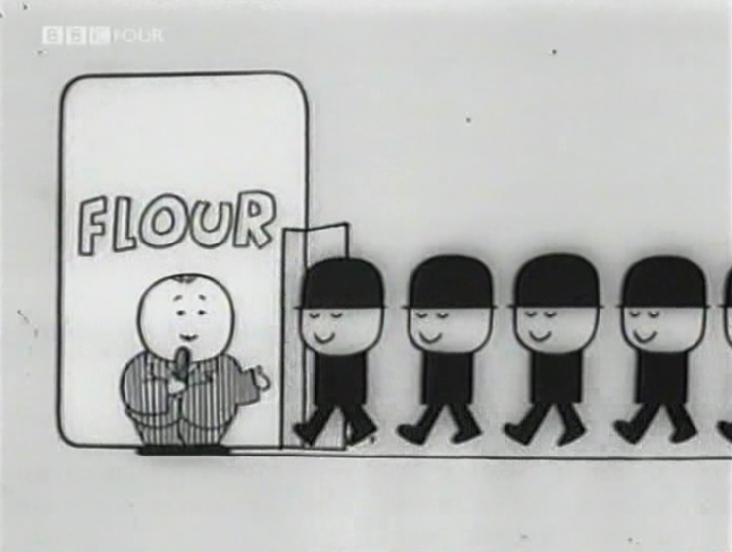
Footage from a McDougall's flour advert. More stills here.


Vera Linnecar: It was the very beginning of ITV, and you didn't really need any capital so long as you could get hold of a camera and a few people who knew how to draw, yo could set up.


Footage from a Castrol advert. More stills here.


Bob Godfrey: Suddenly, forty little animation studios sprung up all like mushrooms. Hire equipment, get an Aeroflex, get a Mitchell, for the day!" You know, so you could start a production company in a telephone box! You know, you could suddenly... suddenly you had the equipment, you could do it!

Narrator: So he did. Bob set up Biographic with editor Keith Learner, and they were later joined by Nancy Hanna and Vera Linnecar. Biographic had a fresh approach that worked well for the new, faster-style ads.


Footage from an unidentified advert, presumably by Biographic. More stills here.


Paul Wells: One of the kind of interesting things about Biographic, particularly in the shape of Bob Godfrey, is Bob Godfrey's resistance to the whole idea that animation has to be from the Disney style or from a modern art style. He wants it, as it wee, to be much more simple, direct, straightforward, and actually not be full animation - you know, the figures can jump about a lot, they actually don't have to do fluid, lyrical movements, they can just jump from one thing to another.


Footage from a Glenryck pilchards advert, presumably by Biographic. More stills here.


Bob Godfrey: You see, when commercial television came, we couldn't do traditional animation because it was too expensive and it took too long. So we would find quick, cut-out ways of doing things. We were very forward looking, avant gard.


Footage from a Shippam's meat paste advert, presumably by Biographic. More stills here.


Vera Linnecar: I think people were trying to experiment, you know, trying to make different ways of expressing things instead of, you know, following the usual type of drawn animation. I think with advertising you can be as creative as you're allowed to be!


Footage from a 1963 Kit-Kat advert by Keith Learner. More stills here.


Paul Wells: Our commercial work has been hugely appreciated worldwide. It's been recognised for its technical skill, its aesthetic skills and for its sheer invention.

Footage from a Remington razor advert.


Narrator: Animation's broad appeal made it the perfect international sales vehicle, and overseas clients began to use British animators to promote their products abroad. This advert was made for release in West African cinemas, and animated at the Larkins studio, now part of the Film Producers' Guild.


Footage from Put Una Money for There. More stills here.


Dick Taylor: The Film Producers Guild were approached by Barclay's Bank for a film to encourage rural people in West Africa to put their money in a savings bank rather than putting it in the thatch or burying it in the ground. It seemed to be that if we were going to work on something which had to appeal directly to people in West Africa, it'd be nice to have some of the same kind of music.

Narrator: Dick Taylor and his team found a young music student called Sam Akpabot, who came up with a West African street band style soundtrack and told the story in a local dialect.

Dick Taylor: It went down very well once the bank'd gathered the courage to show it, because they'd been persuaded that something that showed caricatures of Africans would in fact infuriate the Africans. But in the end they showed it and the film was extremely successful and ran for years and years, and people used to go along to the cinema especially to see it.


Footage from a Rowntree's cocoa advert. More stills here.


Narrator: Not all animated portrayals of Africans were as sympathetic, as this cocoa ad demonstrates.


Footage from a Spam advert. More stills here.


Narrator: By the mid-sixties , TV adverts had become part of Britain's popular culture, and one of the most memorable campaigns was about a group of city gents working in a flour factory. The Homepride flour men were one of the first successful examples of character branding. They were animated by Ron Wyatt and Tony Cattaneo, although the idea for the little English flour graders had actually come from two Americans.


Footage from various Homepride adverts.


Ron Wyatt: Well, they came in with a matchstick man, and because they were Americans they thought all Englishmen wore bowler hats. An d they aid "we've got this wonderful idea - these blokes with bowler hats all go in this bag of flour, and they throw out all the lumps, and they come out and they wipe this bag - 'cause you don't know what it is yet - he wipes it and underneath, 'cause it's all covered in flour, it's the packet. And because they've been in there they haven't got black bowler hats then, they've got white bowler hats, how about that? What a great idea!" You know, I thought, "eurgh". And anyway, and he said, "and graded grains make finer flour". And I said, "no, that won't work".

Narrator: But graded grains and bowler hats caught the British imagination, and within four months Homepride was a brand leader. Wyatt and Cattaneo went on to animate a host of other commercially lucrative characters.


Footage from various adverts, presumably all by Wyatt-Cattaneo.


Ron Wyatt: I found that if you've got a character or a personality you had a good bit of merchandising property there. You could... you had a product identity.

John Webster: I think every company wants its own property that it can use for a long time, everyone's looking for that.

Narrator: Creating a successful animated character is as hard as finding the next Elvis - it's the holy grail of commercial animation.

Andrew Ruhemann: It's like, you know, what makes a star, and what makes just a normal actor. You know when you're in the presence of a star. Well, a drawing is no different, and an animator is no different.


Footage from various Cresta adverts by Richard Williams.


Narrator: Cresta Bear had star quality. He appeared in a series of ads in the seventies and was the brainchild of animator Dick Williams and advertising executive John Webster.

John Webster: We created this bear, who had a kind of spasm which was pinched from Jack Nicholson in Easy Rider. When he takes a drip of whisky he goes into this kind of spasm. "Fresh to the day", he says. And this became a feature in all the ads, he did this spasm. And it got picked up by children, and they all copied it and did it in the playgrounds, and it became quite well known.

Narrator: Cresta Bear sold lemonade to thousands of children who'd never seen Easy Rider, but who loved the crazy bear and his catchy slogan.


Andrew Ruhemann: I think animals work particularly well in animation because I think we as human beings have a tendency to anthropomorphise our animals anyway. We give them human personalities, characteristics, even with our pets, an somehow in animation you can actually make that happen. You can actually give them a personality.


Footage from Oscar Grillo's Kia-Ora advert, a Frosties advert, and a Knorr advert.


Narrator: Anthropomorphic ads like these literally brought brands to life, and it was an animated animal that the Central Office of Information turned to in the seventies to get across a message about child safety.


Footage from various Charley shorts. More stills here.


Dick Taylor: I was using cutout animation and the same littery bits of cutout paper could be transferred from one film to the next, so it was a very economic job from that point of view.

Narrator: The very basic animation was carried by the voice track, with the bizarre yowls of Charley the cat interpreted by his young master. Charley was voiced by the DJ and comedian Kenny Everett.

Dick Taylor: He volunteered to do the entire soundtrack, in fact - music, effects, everything. The only thing was that the voice he provided for the boy was terribly transatlantic and not at all nice, and so I used all the work he'd done except the boy's voice, and I recorded a neighbour's child to do it.

Narrator: Kenny Everett and the neighbour's child spoke directly to their audience, proving that in animation the voice is crucial. In the 1980s the idea of using ordinary peoples' voices to sell something was taken a step further. The Heat Electric ads combined the unscripted musings of members of the public with witty animation, and gave Aardman Animation their first break into advertising.


Footage from various Heat Electric adverts by Aardman.


Peter Lord: The great thing about the advertising is it's hungry, very hungry for ideas. The advertising world is full of people who actually are all looking outward, all round the world, and they're looking for something new. And we had something very, very new, there.

Andrew Ruhemann: It was a clever approach - you know, this sort of documentary style - "real people talking, and let's put animals onto those voices". Now everybody's doing it, hundreds of students are doing it every year in their graduate films and stuff, but then it was pretty novel and it was done so brilliantly.

John Webster: It was something completly new. Understated and yet wonderful humour. And if you had to pick one animation house that represents Britain it would be Aardman.

Narrator: When musician Peter Gabriel was looking for someone to rejuvenate his record career in the mid eighties, he turned to animation and to Aardman. The resulting video used stop frame animation in ways that hadn't been seen before, certainly by a record buying public.


Footage from Aardman's music video for Sledgehammer.


Andrew Ruhemann: Just felt like a very... capturing the spirit of an age, really. It was very British. It was one of those points where you just thought "oh, this is something new", and it moved us up another rung, as it were. It just felt like it was kickstarting, potentially, a new era - which it did.

Peter Lord: The big appeal was that every frame of the finished film, that what you see you would've seen if you' looked through the camera at it. There was no post production, there was no electronic tinkering. In the modern day, if you wanted Peter Gabriel's face to turn blue and clouds to cross it, you could do that so easily with electronic effects. But we did it whereby he sat in a chair like this, and somebody painted his face blue, and then somebody painted the cloud on, and then we took a couple of frames on the camera, and then they painted over the cloud, and painted it on again, a bit further, and so on and so on and so on.


Paul Wells: It's always been the case that animation has remained experimental even as it's entered the popular mainstream. And in the British tradition this has been hugely consistent.

Narrator: Because of the video, Sledgehammer made number 1, not only in Britain, but also America, where it was showcased on the new international music channel MTV. Like ITV in the 1950s, MTV provided a new influx of commercial clients for British animators.


Footage from the Gorillaz video Clint Eastwood and a second music video which I'm not familiar with.


Robert Hewison: I suppose what you could say about MTV is that finally the commercials take over, because what, after all, is a pop promo, but a commercial for a pop record? So what you actually finally end up - which I suppose is the glorification of commercial television in the end - is you have wall to wall advertisements, only they're called pop videos.

Narrator: The music industry has become new of the biggest consumers of animation, where it can be used to enhance or repackage a band and create a world around them. And the introduction of computer generated images or CGI has given the industry a whole new world to explore -the key word for advertisers being "new".


Footage from Shynola's video for Junior Senior's Move Your Feet; Jonathan Dayton and Valerie Faris's video for Oasis's All Around the World; two videos I can't identify (the singer in the first may be Bjork); and the Gorillaz video Rock the House.


Andrew Ruhemann: I think one of the most powerful things about commercial animation is it's constantly pushing for new things. The most common thing you here is, from an agency, is "we want something that looks different". And because that's the most common brief it really forces people like ourselves and our competitors to look for new things.


Footage from Tim Hope's video for Don't Panic by Coldplay.


Narrator: This award-winning video uses CGI, but in ways that software designers probably hadn't imagined. Drawing on old fashioned animation techniques such as cutout and modelmaking, Tim Hope experiments by bringing a new depth to computer imaging.

Tim Hope: I never liked computer graphics, it always looked dead, and the characters were dad, and the worlds were ugly. So I always said "well, actually you can scan pictures in, stick it on a shape in 3D and move it."

Bob Godfrey: I've been in animation a long time nearly always I can tell how things are done. But when I saw his work it completely blew me away, because I quite honestly didn't know how it was done. And I said "how does he do it? I mean, how's it done?" "Oh, he does it on a computer." "Oh, on a computer! Use a lightbox?" "No, he doesn't use a lightbox, no, he makes it up as he goes along, you know, and he just does this." I was just amazed by it.

Narrator: A strong element of Tim Hope's work is carrying on what the best of British animation has done for a hundred years, which is to sell its customers a vision of Britain.


Footage from Tim Hope's video for My Culture by Faithless.


Tim Hope: I think is very British. The architecture 's all based around London, and it's Dixon's and Curries and housing estates and masses of satellite towns. the high street is so uniform now, I think that's a defining thing of modern Britain.

Narrator: Computer technology means that reality and fantasy can now co-exist on screen. When this is done to promote a serious message, as in a recent charity public information film, the effect can be disconcerting and powerful.


Footage from Passion Pictures' NSPCC advert. Live action by Frank Budgen, animation by Russell Brooke.


Andrew Ruhemann: The NSPCC ad, I think that was a script that really needed animation because, here was this ad of a very sort of dark, grungy live action setting of a real person beating up an (albeit animated) kid. And we're used to seeing, you know, if you think Tom and Jerry, we;re used to seeing violence n animation where the characters do bounce back. I think it had to be animation, I don't think people could've tolerated it as live action, it'd have been too much.

Narrator: British animation's ability to create this kind of impact means that new clients are using its services, and old clients keep coming back. The government still uses animation to get a political message across. But today, it's democracy rather than war which needs selling.


Footage from an Electoral Commission film encouraging votes in the 2004 European Parliament election.


Narrator: Propaganda and advertising have come a long way since Arthur Melbourne-Cooper broke new ground promoting patriotism and matches. Today, British animation continues to be at the forefront of new ideas and techniques.


Footage from Matches: An Appeal.


Andrew Ruhemann: It's all about strong graphics, strong colours, fast cutting, new looks, new techniques, and quite frankly I think we're the world leaders at that, I don't think there's anyone to beat us.


Footage from a Murphy's Irish Stout advert directed by Mamoru Oshii at the Japanese studio Production I.G.


Narrator: And British animators continue to push the medium as an art form, whilst still delivering the sponsor's message.


Footage from Alan Smith and Adam Foulkes' 2004 Honda advert. All together now: hate something, change something, hate something, change something, make something better...

1-2-3-4-5-6